
Table of Contents
ToggleSustainable living tools help people reduce waste, conserve energy, and minimize their environmental footprint. These items range from reusable kitchen products to solar-powered devices and composting systems. Adopting sustainable living tools doesn’t require a complete lifestyle overhaul. Small changes, like swapping single-use plastics for durable alternatives, can create significant impact over time. This guide covers the essential tools that make eco-friendly living practical, affordable, and accessible for everyday households.
Key Takeaways
- Sustainable living tools help reduce waste, conserve energy, and save money over time through reusable, durable alternatives to disposable products.
- Start your eco-friendly journey in the kitchen with beeswax wraps, silicone bags, and compost bins—the room that generates the most household waste.
- Energy-saving sustainable living tools like smart thermostats and LED bulbs can cut home energy use by 10-75% and save hundreds of dollars annually.
- Look for third-party certifications (B Corp, Energy Star, FSC) to avoid greenwashing and ensure products meet genuine environmental standards.
- Composting diverts food scraps from landfills and reduces methane emissions while creating free, nutrient-rich fertilizer for your garden.
- Replace items gradually as they wear out—focus on high-impact swaps like reusable bags, water bottles, and LED lighting first.
What Are Sustainable Living Tools?
Sustainable living tools are products designed to reduce environmental harm through reusability, energy efficiency, or eco-friendly materials. They replace disposable or resource-intensive items with longer-lasting, lower-impact alternatives.
These tools fall into several categories:
- Reusable products – Items like cloth bags, stainless steel straws, and glass containers that replace single-use plastics
- Energy-efficient devices – Appliances and gadgets that consume less electricity or use renewable power sources
- Composting and gardening equipment – Tools that turn organic waste into nutrient-rich soil
- Water-saving fixtures – Low-flow showerheads, faucet aerators, and rain barrels
The goal of sustainable living tools is simple: accomplish daily tasks while using fewer resources. A reusable water bottle, for example, can prevent hundreds of plastic bottles from entering landfills each year. LED bulbs use 75% less energy than incandescent lights and last 25 times longer.
Sustainable living tools also save money over time. While the upfront cost may be higher, the long-term value exceeds disposable alternatives. A $30 safety razor outlasts years of cartridge razors. A quality compost bin turns kitchen scraps into free fertilizer.
These tools aren’t just for environmental activists. Anyone can integrate them into daily routines without major inconvenience.
Must-Have Tools for a Zero-Waste Kitchen
The kitchen generates more household waste than any other room. Single-use packaging, food scraps, and disposable utensils pile up quickly. Sustainable living tools can dramatically cut this waste.
Reusable Food Storage
Ditch plastic wrap and sandwich bags for these alternatives:
- Beeswax wraps – Cloth coated with beeswax that molds around bowls and food items
- Silicone bags – Dishwasher-safe pouches that seal tightly and last for years
- Glass containers with bamboo lids – Durable storage that won’t leach chemicals into food
Plastic-Free Kitchen Essentials
Swap common disposables for long-lasting sustainable living tools:
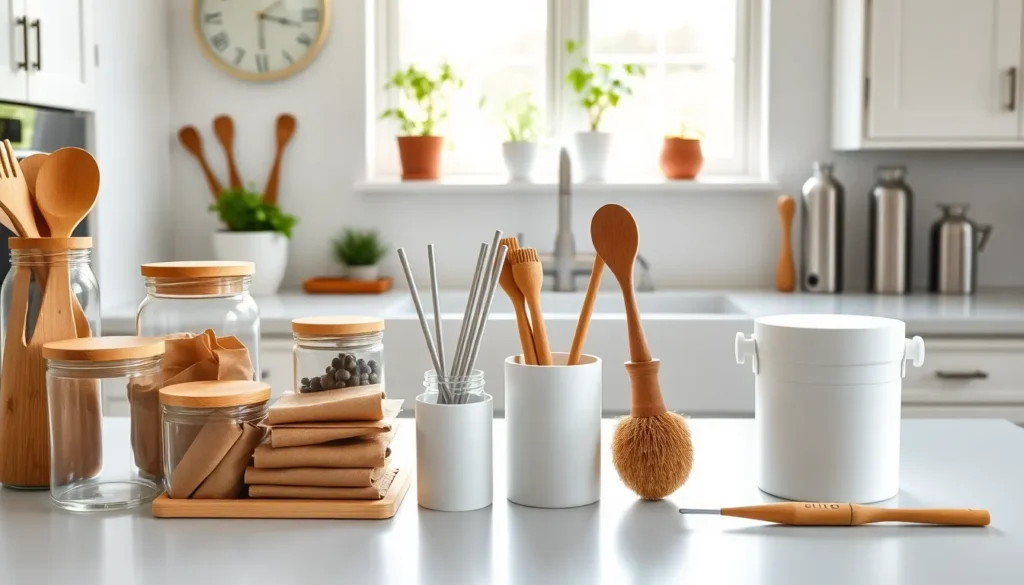
- Bamboo utensils – Lightweight, naturally antibacterial, and biodegradable
- Stainless steel or glass straws – Reusable options that clean easily with included brushes
- Cloth napkins and unpaper towels – Washable alternatives to paper products
- Wooden dish brushes – Replace plastic scrubbers with compostable bristle options
Food Waste Reduction Tools
Nearly 40% of food in the U.S. goes to waste. These tools help preserve food longer:
- Vacuum sealers – Remove air to extend shelf life by 3-5 times
- Produce storage containers – Specialized bins that regulate humidity and airflow
- Countertop compost bins – Keep scraps contained until they’re ready for outdoor composting
A zero-waste kitchen doesn’t happen overnight. Start with one or two sustainable living tools and build from there.
Energy-Saving Devices for Your Home
Home energy use accounts for roughly 20% of U.S. greenhouse gas emissions. Sustainable living tools that reduce energy consumption cut both environmental impact and utility bills.
Smart Energy Management
- Smart thermostats – Devices like Nest or Ecobee learn household patterns and adjust heating/cooling automatically. They can reduce energy use by 10-15%.
- Smart power strips – These cut phantom power to devices on standby. Electronics in standby mode can account for 5-10% of home energy use.
- Energy monitors – Real-time displays show which appliances consume the most electricity
Solar-Powered Sustainable Living Tools
Solar technology has become affordable and practical for everyday items:
- Solar phone chargers – Portable panels that charge devices anywhere
- Solar outdoor lights – Path lights and security lamps that require no wiring
- Solar water heaters – Systems that preheat water using sunlight, reducing gas or electric costs
LED Lighting
LED bulbs remain one of the simplest sustainable living tools available. They use 75% less energy than incandescent bulbs and last up to 25 years. A household that switches to all LED lighting can save $225 per year on electricity.
Water-Saving Fixtures
Water heating consumes significant energy. Low-flow fixtures reduce both water and energy waste:
- Low-flow showerheads – Cut water use by 25-60% without sacrificing pressure
- Faucet aerators – Inexpensive attachments that reduce flow while maintaining function
- Dual-flush toilets – Use less water for liquid waste, full flush only when needed
Eco-Friendly Gardening and Composting Tools
Growing food at home and composting organic waste represent two powerful sustainable living tools. They reduce transportation emissions, cut landfill waste, and create healthier soil.
Composting Systems
Composting diverts food scraps from landfills where they produce methane, a greenhouse gas 25 times more potent than CO2. Options include:
- Tumbler composters – Enclosed bins that rotate for faster decomposition
- Worm bins (vermicomposting) – Red wigglers break down food scraps into nutrient-rich castings
- Bokashi bins – Fermentation-based systems that work indoors and handle meat and dairy
- Outdoor compost piles – Simple and free, though slower than managed systems
Garden Tools Made from Sustainable Materials
Choose gardening sustainable living tools built to last:
- Stainless steel hand tools – Resist rust and outlast plastic alternatives by decades
- Bamboo plant markers – Biodegradable labels that won’t leave plastic fragments in soil
- Heirloom seeds – Non-GMO seeds that can be saved and replanted year after year
Water Conservation in the Garden
- Rain barrels – Collect free water from gutters for irrigation
- Drip irrigation systems – Deliver water directly to plant roots, reducing waste by up to 50%
- Mulch – Organic material that retains moisture and suppresses weeds
Gardening with sustainable living tools creates a closed loop. Food scraps become compost. Compost feeds the garden. The garden produces food. Nothing goes to waste.
How to Choose Quality Sustainable Products
Not all products labeled “eco-friendly” deliver on their promises. Greenwashing, misleading marketing that exaggerates environmental benefits, makes smart shopping essential.
Look for Certifications
Third-party certifications verify that sustainable living tools meet specific standards:
- B Corp – Companies meeting high social and environmental performance standards
- Energy Star – Appliances and devices that meet EPA energy efficiency guidelines
- USDA Organic – Products made without synthetic pesticides or fertilizers
- FSC Certified – Wood and paper products from responsibly managed forests
- Cradle to Cradle – Products designed for safe material reuse or composting
Prioritize Durability
The most sustainable product is one that lasts. Before purchasing sustainable living tools, consider:
- Material quality – Stainless steel, glass, and solid wood outlast plastic
- Warranty – Manufacturers confident in durability offer longer guarantees
- Repairability – Can broken parts be replaced, or must the whole item be discarded?
- Reviews – Real user feedback reveals how products perform over time
Consider the Full Lifecycle
Evaluate sustainable living tools from production to disposal:
- Where are materials sourced?
- How far does the product ship?
- What happens at end of life, recycling, composting, or landfill?
A bamboo toothbrush made overseas might have a larger carbon footprint than expected. A locally manufactured option with recyclable packaging could be the better choice.
Start Small and Build
Don’t feel pressure to buy everything at once. Replace items as they wear out. Focus on high-impact swaps first, reusable bags, LED bulbs, and water bottles make immediate differences.


